
Last Updated on July 7, 2026 by Taya Ziv
A four-person startup called Torch spent years building an app that unified your medical records into one place. A small team. A clear problem. Real users. Then OpenAI showed up with a check for somewhere between $60 million and $100 million, and the product vanished. The team now works on ChatGPT Health. The app? Gone.
Five days before that, OpenAI picked up the team behind Convogo, an executive coaching AI tool. The spokesperson was direct about it: they’re not acquiring the IP or the technology. They’re hiring the team to work on “AI cloud efforts.” Convogo’s product? Also gone.
Three weeks ago, they bought Astral, the company behind some of the most popular open-source Python developer tools on the planet. Millions of developers use Astral’s tools daily. And now that technology feeds into OpenAI’s Codex product line.
This shift is one of the forces reshaping the AI startup ecosystem 2026 at the macro level.
In three months, OpenAI has completed six acquisitions. That’s nearly as many as the eight they did in all of 2025. Seventeen companies bought in three years total. And the pattern is so consistent it’s almost boring: find a small team that built something useful, write a check, absorb the engineers, shut down or fold the product.
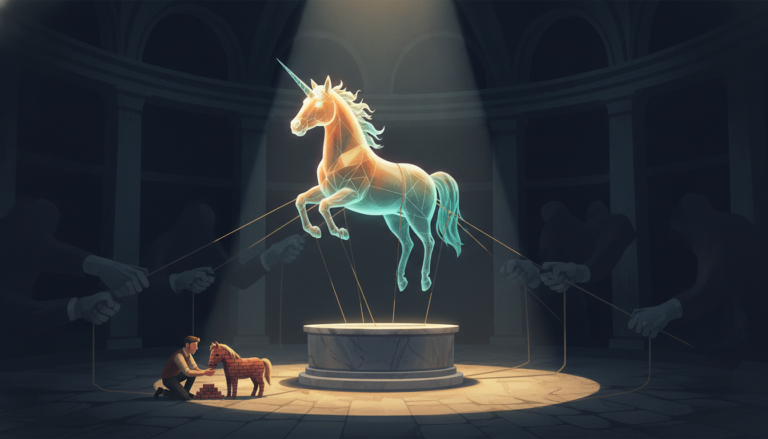
This isn’t a company making strategic bets on new markets. This is a talent vacuum cleaner with $110 billion in fresh funding and an IPO to prepare for.
It’s Not Just OpenAI
And that’s actually the less interesting part of the story.
Meta spent $2 billion to acquire Manus in December, the startup that built autonomous browser agents. Then in March, they acqui-hired the co-founders and team from Dreamer, an agentic AI startup. The team, including former Google and Meta executive Hugo Barra, joined Meta’s Superintelligence Labs group. Dreamer’s product? You can guess.
Google’s playbook is slightly different but the outcome is the same. Their $3 billion licensing deal with Character.AI was structured so carefully that it technically wasn’t an acquisition. Except the co-founder and a chunk of the engineering team now work at Google DeepMind. And the FTC opened an investigation into the deal because, well, it walks like an acquisition.
Microsoft did the same thing with Inflection AI. A $650 million deal to license the technology and hire the team, including the CEO. Inflection’s consumer product, Pi, was effectively abandoned.
The FTC actually issued a landmark staff report in mid-2025 concluding that these “pseudo-acquisitions” could constitute unfair competition. The Department of Justice opened formal investigations. But the deals keep happening. Because the talent math is simple: it’s cheaper to buy a startup with 10 brilliant AI engineers than to recruit those same engineers one by one in the most competitive hiring market in history.
The Math That Should Worry Founders
Let me put some numbers on what’s happening here.
OpenAI paid $60 to $100 million for Torch’s four-person team. That works out to roughly $15 to $25 million per engineer. For Convogo, the team was similarly tiny and the reported price was in the tens of millions. Astral’s deal terms aren’t public, but the company had raised about $4 million in venture funding, which means even a modest acquisition was a significant return for early investors.
Now here’s where it gets complicated. These aren’t failures. Torch had a real product. Astral had millions of users. Convogo was generating revenue. These are companies that were working. They were building something people actually used.
And they still got bought and folded.
The traditional acquisition story in tech used to be: big company buys small company because the product is too good to compete with. Instagram. YouTube. WhatsApp. The product was the point.
The 2026 version is different. The product is barely relevant. What matters is the team. The engineers who know how to build things that work. The researchers who understand the bleeding edge. The founders who can ship. OpenAI doesn’t need another health records app. They need people who can build one in their sleep.
And I think a lot of founders haven’t processed what this means for them.
The Acqui-Hire Used to Be a Consolation Prize
Back in 2015, getting acqui-hired was the startup equivalent of a participation trophy. It meant your company didn’t work out, but at least Google would give you a job and pay your investors back. Nobody celebrated an acqui-hire. It was the polite way of saying “we failed, but with a soft landing.”
That’s completely changed.
In 2026, we wrote about how one-person AI-powered startups are competing with 500-employee companies. The flip side of that story is just as wild. A four-person team that built a medical records app for maybe $500K in total can exit for $100 million. Not because their business was worth $100 million. Because their brains were.
The acqui-hire isn’t a consolation prize anymore. For some AI startups, it might be the best possible outcome. Better than trying to compete with a company that has $110 billion in cash and a direct line to every enterprise on earth.
But here’s the part that bothers me. If the best-case scenario for an AI startup is getting bought by OpenAI and having your product shut down, what are we actually building? If the most talented people in AI spend two years creating something useful, only to have it absorbed into a corporate monolith, does the ecosystem get better or worse?
I’m honestly not sure I know the answer. But I think the question matters more than most people realize.
What This Actually Means for Founders
If you’re building an AI startup right now, you’re operating in a world with two possible outcomes, and you need to be honest about which one you’re aiming for.
Path one: you’re building to get bought. This is a legitimate strategy, and in 2026 it might even be the smarter one for certain teams. If you have three to five exceptional AI engineers and you can demonstrate that your team can build something impressive, you are worth $10 to $25 million per person to OpenAI, Google, Meta, or Microsoft. The product you build is basically your audition tape. It needs to show that you can ship, that you understand the cutting edge, and that you’d be a force multiplier inside a larger organization. If this is your path, optimize for team quality and technical impressiveness over revenue.
Path two: you’re building something they can’t buy. This is harder, and it’s the only path that leads to an independent company. We’ve talked about the vibe coding trap before, how easy-to-build products are easy to replicate and easy to replace. The same logic applies to acquisitions. If your entire value is your team, then your entire value walks out the door when your team gets a better offer. The companies that survive the consolidation wave are the ones with something that can’t be replicated by throwing money at it: deep domain expertise in a regulated industry, proprietary data that took years to collect, customer relationships that are genuinely sticky, or a network effect that grows with usage.
The middle ground, where you build a decent AI product and hope to grow into something big, is getting squeezed from both sides. You’re not impressive enough for a $100 million acqui-hire and not differentiated enough to compete independently.
The Counter-Argument I Keep Hearing
Smart people keep telling me this is just how tech has always worked. Microsoft bought 200+ companies in the 2000s. Google acquired Android, YouTube, Waze, DeepMind. This is the natural cycle of innovation: startups invent, big companies acquire, and the next generation of startups gets funded by people who cashed out.
And they’re not entirely wrong. There’s a version of this story where the acqui-hire wave is healthy. Where talented people join big companies, build transformative products at scale, learn from the experience, and then leave to start the next wave of companies. The Facebook alumni network created dozens of billion-dollar companies. The Google alumni network might be even more productive.
But I think 2026 is different in one important way. The concentration is faster and more complete than anything we’ve seen before. OpenAI went from zero acquisitions in 2023 to seventeen in three years. The speed at which talent is being absorbed into a handful of companies is unprecedented. We’ve already seen what happens when every AI startup looks the same: the entire wrapper category collapsed because nobody had real differentiation. Now the differentiated ones are getting bought too.
If the best AI engineers all end up at four companies, who builds the weird, unexpected, category-defining products that those companies would never greenlight? That’s not a rhetorical question. It’s a real problem.
Where the Opportunity Actually Lives
I don’t want to leave this on a doom note because the situation isn’t hopeless. It’s just different from what most founders expected.
The consolidation wave is creating gaps that are genuinely hard for big companies to fill.
Regulated verticals are your friend. OpenAI can buy a health records startup, but they can’t buy their way through HIPAA compliance, medical device certification, or the trust relationships with hospital systems that take years to build. Legal AI, healthcare AI, financial services AI, defense AI. These sectors are hard precisely because the product is only 30% of the value. The other 70% is regulatory knowledge, institutional trust, and domain expertise that you can’t acqui-hire.
The open-source play is getting interesting. The FTC is watching. The DOJ is investigating. There’s a real possibility that the pseudo-acquisition model gets regulated or restricted. Companies that build on genuinely open-source foundations, with communities that can’t be bought, are positioned to benefit if the regulatory hammer falls. It’s a bet on the government actually following through, which is always risky. But the legal groundwork is being laid.
Build where the giants are looking away. Right now, the biggest companies are all staring at the same targets: foundation models, developer tools, enterprise agents, healthcare. There are entire categories of AI applications that nobody at OpenAI is thinking about because they’re not big enough to matter at their scale. Industrial inspection. Agricultural optimization. Local government operations. Education for underserved markets. These aren’t sexy, and they won’t get you on the cover of Wired. But they also won’t get you acquired and shut down.
The Exit You Didn’t Plan For
Six acquisitions in 90 days. Seventeen in three years. Products built by talented teams, used by real people, shut down within weeks of the deal closing.
If you’re building in AI, you should probably decide right now whether you’re building a company or a resume. Both are valid. But pretending you’re building one while actually building the other is how founders end up disappointed.
The AI ecosystem is consolidating faster than any technology sector in history. The window for building an independent AI company hasn’t closed, but it’s narrowing. And the founders who navigate this moment successfully will be the ones who were honest with themselves about what they’re actually building, and for whom.
Because right now, the biggest AI companies in the world have decided that the fastest way to innovate is to buy innovators. And the only question that matters is whether you’re building something that’s worth more alive than absorbed.