
Last Updated on July 7, 2026 by Taya Ziv
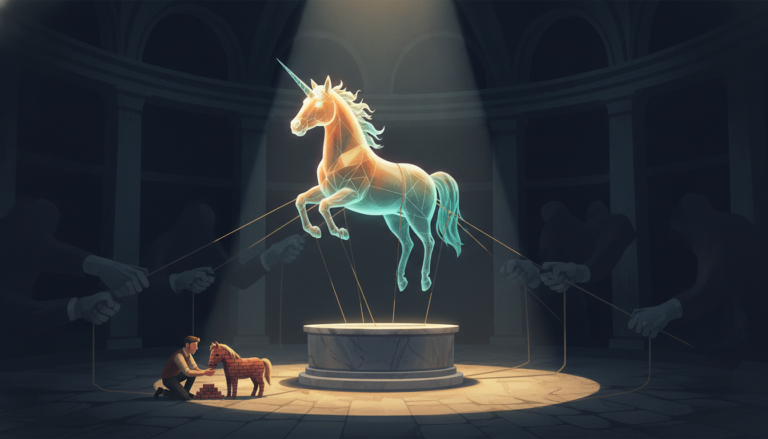
There is a line from Field of Dreams that has quietly run startups for forty years. Kevin Costner stands in his cornfield, hears a voice, and builds a baseball diamond in the middle of nowhere. “If you build it, he will come.” The whole movie is about faith that the thing you make will summon the people who want it.
Founders have been living inside that sentence for a very long time. Build the product, make it good enough, and the customers arrive. It was never fully true, but for years it was true enough that you could believe it while you shipped.
Then Supabase went and surveyed more than 2,000 founders and builders for its State of Startups 2026 report, and the numbers do something I have rarely seen a survey do. They call the bluff on the whole idea.
The one number that changes the story
Every year this survey asks founders what their biggest business challenge is. This year the biggest single move in the entire report was this: “technical complexity” as the top challenge fell from 24 percent to 11 percent. It got cut in half in twelve months. Building the thing stopped being the scary part.
You can see why in the same data. 62 percent of these startups now have a majority of their codebase written by AI. 41 percent are somewhere between 76 and 100 percent machine-written. Only 2 percent write everything by hand. The hard, expensive, specialized act of making software, the thing that used to require a technical co-founder and a year, now runs in the background while you drink coffee.
So what replaced technical complexity at the top of the fear list? Customer acquisition. It is now the number one challenge for 32 percent of founders. Product-market fit sits at 14. Fundraising at 13. Getting customers is nearly as big a worry as the next three things combined.
Read those two facts next to each other. Building got easy. Selling got scarier. One founder in the survey put it flatter than I ever could: “Building is the easy part. Distribution is the hardest. There is no unique idea or product anymore.”
Why this matters more than any funding headline
I have been saying a version of this to founders for years, usually to a polite nod and zero behavior change. Product-market fit without distribution is an expensive hobby. Technology is a distraction until you have proof that somebody wants what you are selling.
For a long time that was an opinion. You could disagree with me and point at some genius product that broke out on pure quality. Now it is just arithmetic. When 62 percent of code is written by a machine and the fear of building collapses by more than half in a year, the product is not your moat. It cannot be. Your competitor has the same machine, the same speed, and probably the same idea. We wrote a whole piece about how the fastest way to build a startup with AI is also the fastest way to build one nobody wants, and this survey is the receipt.
The moat was never the code. It was the answer to a boring question: can you get in front of the person with the problem, and can you get them to pay you. That was always the hard part. AI just stripped away everything else that used to hide it.
Here is the part that actually worries me
If the story ended at “distribution is the new moat,” this would be a comfortable article and you have read it ten times already. That is not the story. The story is that founders correctly named the problem, and then, in the very same survey, described themselves running away from every tool that solves it.
Look at what these same 2,000 people are doing. 67 percent have never tried paid acquisition, not once, and that number went up from last year. 53 percent of the ones with a real go-to-market motion do not keep any CRM at all, not even a spreadsheet with names in it. 33 percent say they have no online presence whatsoever, up five points in a year. One in ten founders has given up on social media entirely. Two out of three are not going to a single industry conference.
Sit with that. In the exact year that getting customers became the number one fear, a third of founders went invisible, most refused to pay to be seen, and half stopped writing down who they were even talking to. They diagnosed the disease and then quietly threw out the medicine. It is the startup version of knowing you need to go to the gym and responding by canceling your membership.
I get why it happens, honestly. Building is fun now. It gives you a small win every twenty minutes. Selling is awkward, it involves rejection, and there is no AI that will feel the sting of a prospect ghosting you for the fourth time. So founders retreat into the one room where the machine makes them feel powerful, and they call it work. 61 percent of these companies are now solo founders, which means there is nobody sitting across the table to say, you shipped four features this week and talked to zero humans.
What to actually do about it
Treat distribution like the build target it now is. You just got handed back the months AI used to take from engineering. Do not spend all of them on more features. Spend them on getting in front of people, because that is the scarce thing now.
Pick one channel and be genuinely loud on it. Not everywhere, one place. Founder-led still works because people trust a face over a logo, and a third of your competitors just walked off the field by going quiet. Their silence is your opening. This is the same logic behind the ninety-day revenue rule that is quietly replacing MVP culture: if you cannot get someone to pay inside a season, you do not have a problem more code will fix.
Keep a list. If a CRM feels like too much, open a Google Sheet today with three columns: who you talked to, what they said, what is next. That is a CRM. The point is that you start treating conversations as an asset instead of letting them evaporate.
And stop pretending the product will do the talking. When your next competitor is one person with a laptop and the same models you use, the only thing you own that they cannot copy overnight is the trust and the audience you built by showing up. That is not a growth hack. It is the whole company now.
The cornfield is full
Here is the ending Field of Dreams never showed you. The voice was right, you built it, and so did everyone else, because the voice was talking to all of us and the tools got free. Now there are ten thousand diamonds in ten thousand cornfields, and the people you were waiting for are driving past every one of them.
They will stop at exactly one. It will not be the best built. It will be the one that stood at the road and waved.