
Last Updated on July 7, 2026 by Taya Ziv
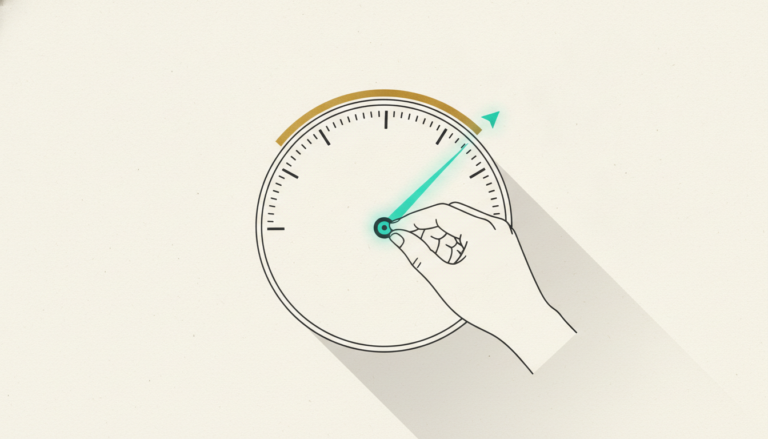
By September, the most common marketing task inside a startup, the one you were about to hire someone junior to do, becomes a button.
Not a metaphor. An actual button. Google confirmed it is retiring Dynamic Search Ads and auto-migrating every eligible campaign to a system called AI Max, starting this September, with the whole migration wrapped up by the end of the month. You will not opt in. Come Phase 2, you will not even be allowed to build the old kind of campaign anymore. The machine picks your search terms, writes your ad text, and expands your landing pages on its own. Google says advertisers running the full feature set see about a 7 percent lift in conversions at the same cost. So it is not just automatic. It is, on average, better than the person you would have paid to do it.
Meta is going further. It has told advertisers it expects to offer fully automated AI ad campaigns by the end of 2026. Zuckerberg’s version of the pitch is almost insultingly simple: you set a goal and a budget, hand over a product image, and Meta’s AI writes the creative, picks the audience, chooses the placement, sets the bid, and moves the money around. Everything between “here is my product” and “here are my results” disappears into a box you do not open. Amazon already tucked ads inside Rufus, its shopping assistant that fields something like 274 million questions a day, so the machine now answers “what should I buy” with a sponsored result before a human ever sees a page. It is the same shift I traced when ChatGPT quietly turned itself into an ad machine founders now have to plan around, just spreading to every surface at once.
The signal is not the automation. It’s what’s left standing.
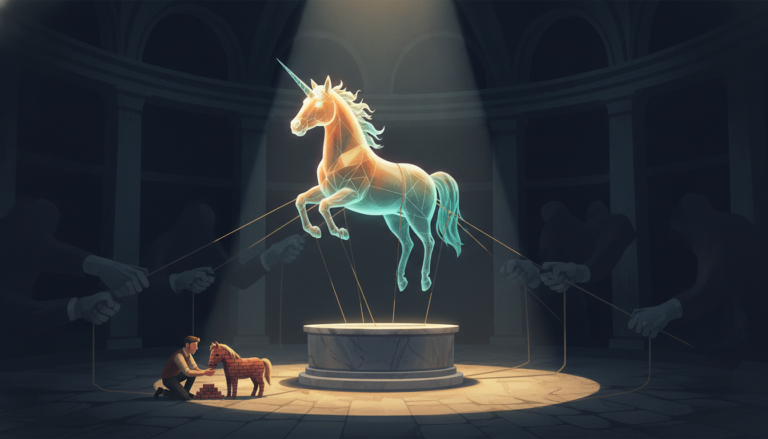
Read all three moves together and the story writes itself. The entire executional layer of paid marketing, the clicking and testing and bidding that used to be a real job with real headcount, is being folded into a shared black box that Google, Meta, and Amazon operate for everyone at once.
Here is the part nobody putting out these press releases wants to say plainly. If the machine makes your ads better, it makes your competitor’s ads better by the same amount, with the same tools, off the same playbook. You are all feeding the same engine the same kind of inputs, and it is tuning all of you toward the same middle. When execution becomes free and identical, execution stops being an edge. It becomes table stakes, like having a website.
I have watched founders misread this exact kind of shift before. When AI made building software almost free, a lot of people celebrated like they had won something, right up until they noticed everyone else got the same gift on the same morning. I wrote about how the fastest way to build a startup with AI turned out to be the fastest way to build one nobody wants, and this is the marketing sequel to that story. The tool that levels the field does not hand you the field. It just moves the fight somewhere the tool can’t reach.
Why this should worry you more than it excites you
The honest truth is that most founders will feel relief reading this. One less thing to hire for. One less skill to learn. The ad account runs itself now, so you can go back to the product.
That relief is the trap, and I say that as the least technical person you will meet, someone who genuinely cheered when machines started doing the parts of my job I was bad at. Because the automation is not deleting marketing. It is deleting the part of marketing that was always the least valuable, and leaving fully exposed the part most founders have spent years avoiding.
Think about what the box actually does. It aims at a goal you define, for an audience it can find, with a message it can generate. Notice everything it does not decide. It does not decide who you are for. It does not decide what you sell them or why it beats the alternative they are already using. It does not decide the one sharp thing you say that makes a stranger stop and feel like you are reading their mind. The machine is a world-class executor of a strategy it cannot invent. Feed it a muddy answer to “who is this for and why should they care,” and it will spend your budget with breathtaking efficiency reaching people who will never buy.
This is the thing I have been saying for years, usually to polite nods and zero behavior change: a startup’s marketing is guerrilla warfare, not resource allocation. It was always about clarity and focus, about picking a fight you can win, not about who could operate the ad dashboard best. For a long time the dashboard skill hid that. A clever media buyer could paper over a fuzzy position with good execution and make the numbers look fine for a while. That cover is gone now. When everyone’s execution is equally good, the only variable left is the strategy underneath it, and the market is about to show every founder, in public, whether they actually had one.
It is also why the most dangerous hire in this new world is the same one it always was. The person who knows how to run enormous campaigns at a big company, who needs the budget and the tools and the team to look impressive, is being automated out of the one thing they were good at. The person who can look at a confused startup and say “no, this is who we are for and this is the one sentence that matters” is suddenly the whole game. Those are not the same person, and founders keep hiring the first one hoping to get the second.
What to actually do about it
Stop treating positioning like a branding exercise you will get to later, and start treating it like the only input that still gives you an edge. Your competitors are handing the platforms a URL and a budget. If that is all you hand it too, you have entered a fair fight with your own commoditization, and fair fights are how startups die. Distribution is still the whole company, the machine just changed which part of distribution is scarce.
Three concrete moves. First, before you touch any ad account, write the one sentence that says who you are for and what you do that the obvious alternative does not. If you cannot write it, no algorithm on earth will rescue you, and you should fix that before you spend a dollar. Second, decide the audience the machine should not be allowed to drift away from. AI Max expands your reach automatically, which sounds great until it quietly spends your money on the average customer instead of your customer. Your job is to keep pointing it back at the specific person who actually has the problem, the same discipline that matters now that your next competitor is one person with a laptop and the same tools you have. Third, put your human hours where the machine can’t go: the offer, the message, and talking to actual customers until you know the exact words they use. That is the raw material the box needs and cannot generate. Give it a sharp one and it becomes a weapon. Give it a vague one and it becomes an expensive way to be ignored, faster than ever.
The button is coming either way
I keep going back and forth on whether this is good or bad for founders, and I have landed on this: it is brutal for the ones who were using execution to hide, and it is the best thing that has happened in years to the ones who actually did the strategic work. The machine is about to make everyone equally good at the part that never mattered. Whatever is left after that, the who and the what and the why, is the only marketing you actually own. It always was. The button just made it impossible to pretend otherwise.