
Last Updated on May 17, 2026 by Eytan Bijaoui
⚡ Quick Answer: Meta just laid off 16,000 employees and replaced many roles with AI systems. The stock went up. The message is clear: the market now rewards companies that replace human headcount with AI capability.
📅 Last updated: March 29, 2026
Remember that scene in Moneyball where the old scouts are sitting around the table arguing about “the gut” and “the intangibles” while Billy Beane quietly replaces them with a spreadsheet?
This shift is one of the forces reshaping the AI startup ecosystem 2026 at the macro level.
That just happened. At scale. In real life.
Last week, reports came out that Meta is considering cutting up to 20% of its workforce. That’s roughly 16,000 people. The same week, Meta signed a $27 billion AI infrastructure deal with Nebius Group. And plans to spend between $115 billion and $135 billion on AI this year alone.
The stock went up 3%.
Let that sink in. Wall Street looked at “fire 16,000 humans, buy $27 billion worth of GPUs” and said: yes, more of this please.
This Isn’t a Layoff. It’s a Swap.
I’ve been in the startup world long enough to know that layoffs happen. Companies overhire, markets shift, budgets tighten. That’s painful but normal.
This is different.
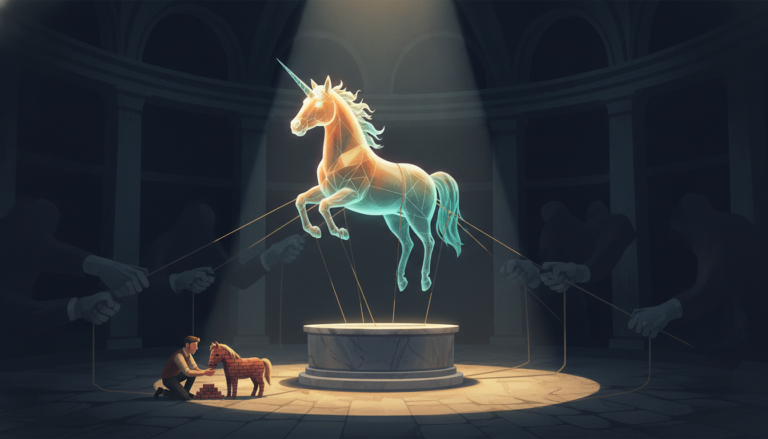
Meta isn’t cutting people because business is bad. Business is fine. They’re cutting people because they believe AI infrastructure is literally more valuable than human employees. And they’re putting $27 billion on that bet. In one deal.
Think about that math for a second. If you divide $27 billion by 16,000 employees, that’s about $1.7 million per person replaced. Meta is saying, out loud, that each of those roles generates less value than $1.7 million worth of compute.
And they’re not alone. Jack Dorsey’s Block cut 4,000 employees in February to “move faster with smaller, highly talented teams using AI.” Amazon eliminated 16,000 roles in January. Over 12,000 jobs in the US have already cited AI as the reason for cuts this year. And it’s only March.
Why Founders Should Pay Attention (But Not Panic)
Now, I know what you’re thinking. “Liran, I’m a pre-seed founder with 3 people. This Meta stuff doesn’t apply to me.”
Actually, it does. Maybe more than anyone.
Because here’s what Wall Street just told every CEO, board member, and investor in the world: the companies that swap headcount for AI infrastructure are the winners. Not the ones that “explore AI use cases.” Not the ones that “have an AI strategy.” The ones that actually reduce humans and increase compute.
That signal is going to trickle down. Fast.
Your next investor meeting? They’re going to ask how you’re using AI to stay lean. Not “are you exploring AI.” How are you using it. Right now. With numbers.
And honestly, for startups, this could be a massive advantage. Because you were already forced to be lean. You never had the luxury of 79,000 employees. You’ve been doing the “small team, big output” thing since day one.
The question is whether you’re doing it on purpose or by accident.
The Real Lesson: Your Team Is No Longer Your Moat
This is the part that’s hard to say, because I genuinely believe in people. But the data is pointing somewhere uncomfortable.
For years, the startup playbook was: hire great people, build a great culture, and your team becomes your competitive advantage. And that was true. When everyone had access to the same tools, the difference was the humans using them.
But now everyone has access to AI that can write code, design interfaces, analyze markets, generate content, and automate workflows. Spotify’s top developers reportedly stopped writing new code back in December. AI handled 300,000 lines for them instead.
So if your team isn’t your moat anymore, what is?
Paul Graham wrote an essay recently called “The Brand Age.” His argument: when technology commoditizes (and AI is commoditizing faster than anything in history), industries shift to competing on brand. He used the Swiss watch industry as an example. When quartz watches made mechanical watches technologically obsolete, the mechanical watch industry didn’t die. It pivoted to brand, craft, and trust.
And I think he’s right. Look at Anthropic. Claude went from 0% to roughly 70% of US business AI subscriptions in 12 months. Not because Claude is technically better than GPT (it might be, but that’s not the point). Because Anthropic built trust. They refused to let the Pentagon use Claude for autonomous weapons. They got blacklisted for it. They sued. 30+ employees from OpenAI and Google filed amicus briefs supporting them.
Trust beat benchmarks. Brand beat features. In the AI industry itself.
So What Do You Actually Do About This?
I’m going to be direct, because that’s what this moment calls for.
1. Audit your team like Meta would. I’m not saying fire anyone. I’m saying honestly look at every role and ask: “Could AI do 80% of this in 6 months?” If yes, start shifting that person toward the 20% that AI can’t do. Strategy. Relationships. Judgment. Creativity that requires actually understanding your customer’s world.
2. Stop hiring for tasks. Start hiring for taste. The era of hiring someone because they can execute a process is ending. AI executes processes. Hire people who know which process to execute. People who can look at AI output and know whether it’s good or garbage. That’s the human skill that matters now.
3. Your burn rate is your strategic weapon. If Meta is spending $135 billion on AI infra, and Nvidia is projecting $1 trillion in chip orders, that means AI tools are about to get dramatically cheaper and more powerful. At GTC 2026, Jensen Huang projected that inference costs will drop 10x with Vera Rubin. Your ability to stay alive long enough to ride that wave is everything. Don’t overhire. Don’t over-build. Validate your market, prove someone will pay, and then use AI to do the work of 10 people with 3.
4. Build trust before you build product. If the Anthropic story teaches us anything, it’s that trust is the new moat. Not features. Not benchmarks. Not “AI-powered” labels. In a world where every product can slap AI on it, the companies that win are the ones people actually believe in. Start building that now. Be transparent about what your product does and doesn’t do. Have opinions. Take positions. Be a real company with real values, not another “we use AI” landing page.
The Uncomfortable Truth
Maybe I’m wrong about some of this. I’ve been wrong before. I once thought Product Hunt launches actually mattered for long-term growth (they don’t, by the way).
But I don’t think I’m wrong about the direction. Capital is flowing from humans to machines. Wall Street is rewarding it. The biggest companies in the world are doing it openly.
And if you’re a founder who’s building right now, the smartest thing you can do is accept that the game has changed and play the new game better than everyone else.
Not by being scared of AI. By being the kind of company that uses AI so well that you never need to be 79,000 people in the first place.
The startups that will win in 2026 aren’t the ones with the biggest teams. They’re the ones with the best taste, the strongest trust, and the leanest burn.
Build accordingly.
What do you think? Is the “headcount for compute” swap the new normal, or is this a bubble moment? Drop your take in the comments.